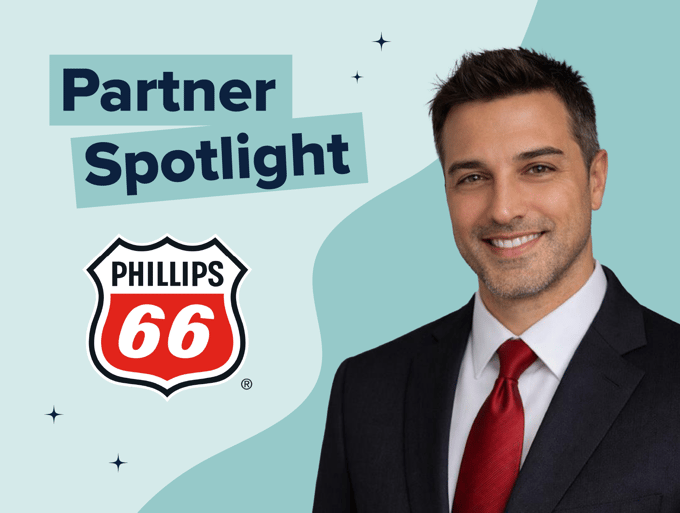
My Journey to an Engineering Career: A Q&A with Phillips 66’s Alex Sideris
Since 2023, PLTW Transformative Partner Phillips 66 has supported the PLTW Grants program to increase access to PLTW Gateway for middle school students and PLTW Engineering and PLTW Computer Science for high school students in U.S. communities where the company has a presence. Tens of thousands of students have already benefited from this partnership as they learn about a range of STEM career paths and are better prepared for high school and college level coursework, and the company’s third $1 million investment in PLTW ensures more students will have access to high-quality STEM career learning.
We recently connected with Phillips 66 Commercial and Business Development Senior Director Alex Sideris to learn more about his path from high school student to engineering professional. From high school chemistry and calculus courses to majoring in chemical engineering at Louisiana State University, Alex knew that he wanted to be an engineer. But he says that the hands-on experience he gained in internships throughout college helped him define what a career in engineering could mean for him. Read on to learn more about his journey to a two-decades long career at Phillips 66 and his advice for his own children.
PLTW: What drew you to the engineering field? When and how did you realize that was the career path you wanted to take, even if you didn’t know exactly what that would look like?
Alex: I was encouraged by my high school chemistry teacher to pursue engineering. I’ve always been pretty good at math and chemistry. I’ve also always had technical curiosity and ability (building things, taking things apart, trying to figure out how stuff works). Those traits, coupled with a pretty logical personality, ties pretty well to the engineering field.
I still didn’t really know or appreciate what an engineer actually did until I had my first internship. I was doing well in my classes, but textbooks and class did not provide a view into the life of an engineer. When I interned and met the people, worked in a plant environment, was given items to work on with the context of why they were important for that facility, that’s when I knew that this was something that I could do and could be successful doing.
PLTW: What internships or other opportunities did you have that helped guide you towards your current career? What role did mentors play in your journey?
Alex: I completed a three-semester co-op with one chemical company and a separate summer internship with another chemical company. First off, that experience was critical to acquiring a full-time job in a depressed job market. Around the time I graduated, the job market was not great. Many of my classmates could not get interviews or jobs. But my internships demonstrated relevant work experience that companies valued and in turn I had several options of which company to work for. More importantly, it provided me with a view of what work and industry was actually like, and the guidance received from my bosses and counterparts back then shaped how I approached my work from then on.
PLTW: In your career, how have skills like teamwork, communication, and collaboration come into play in everyday work life?
Alex: There is not much in my multiple roles through my career that I could have single-handedly accomplished. Teamwork, communication, and collaboration are truly basic skills, but they are vastly important. Most of the tasks we perform span across multiple teams and individuals with different roles. Having a good working relationship and line of communication allows for more smooth and efficient completion of work.
The thing I'm most proud of is the interactions with others, especially on the mentoring side; being able to help someone else's career path, to give guidance when someone reaches out with questions, to tell people what my career experience has been like and give suggestions on what they could do. That's the meaningful part. My base job is to make successful decisions for the company, but the best part is the people side.
PLTW: You have young children. What advice do you give them that you hope will make an impact on their future?
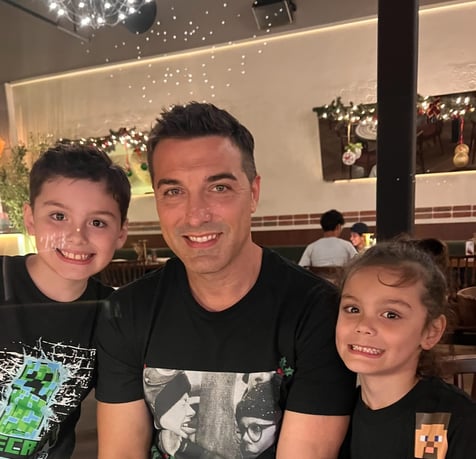 Alex: I have two young boys, and I love the conversations we have. Two things that I really try to convey to them: 1. Work hard, and 2. Mistakes are okay. It’s important to know that you may not be the smartest or most skilled. I certainly wasn’t. There are lots of brilliant and talented kids and adults around. But one thing that can never be taken away or denied is the work or practice that you put in. To build on that, don’t worry about mistakes and don’t let them discourage you. The only way to learn is from making mistakes. I’ve always tried to be perfect, and there’s nothing wrong with wanting to achieve that, but nobody is 100% perfect. It’s okay to make those mistakes along the way. The mistake isn’t the important thing… it’s about what you learn and do next after the mistake that really matters.
To learn more about partnerships that support STEM education and CTE programs from PreK through 12th grade, visit pltw.org/partners.