Career and Technical Education (CTE)

Learn what Career and Technical Education (CTE) is, why it matters, and how K–12 schools nationwide implement high-impact CTE programs. 

What Is Career and Technical Education (CTE)?

A Modern Approach to College and Career Readiness

Today’s educators are navigating changes in policy, postsecondary, and workforce realities. At the same time, their students are adapting to and planning for an evolving landscape of potential careers. In response to these trends, forward-thinking leaders are expanding career and technical education (CTE) in ways that align with the future of work. 

According to the Strengthening Career and Technical Education for the 21st Century Act (Perkins V), CTE is an organized set of educational activities and a sequence of courses that incorporate rigorous academic content; provide relevant technical knowledge and skills; and leverage forms of applied learning, such as work-based or competency-based.

In primary and secondary classrooms, CTE expands student access to the array of postsecondary pathways and strengthens workforce readiness. Along with higher student engagement and academic achievement, research shows these programs also increase graduation rates and employability.

What’s the difference between modern CTE and traditional vocational education?

Through modern CTE programs, students can explore vertically integrated career pathways and earn credentials of value for college and the workforce. Traditional vocational education is more limited in its scope and scalability, as it prepares students to pursue a specific job rather than readying them for a variety of occupations and postsecondary paths. 

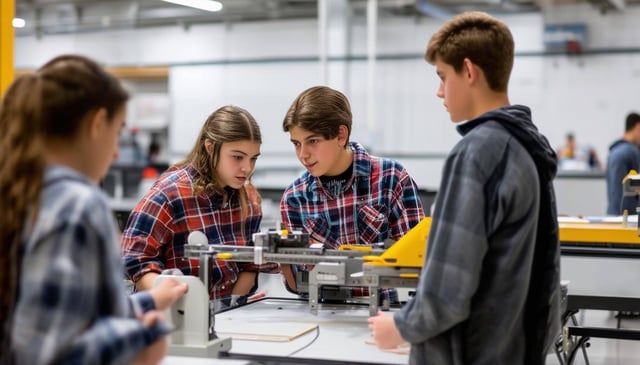
Manufacturing classroom with middle school or high school students-2

The Landscape: Why CTE Matters in PreK–12 Education 

Students need clear pathways that help them decide what they want to do in adulthood. CTE equips the next generation for many of the occupations communities rely on. From agriculture and supply chain to healthcare and manufacturing, enabling workforce readiness through CTE is critical to the future of the U.S. economy.

Industry verticals including infrastructure and construction, renewable energy, and smart technology are in high demand, but lack qualified workers. For example, the need for skilled trades professionals is projected to rise 4% to 60% by 2033 as retirements increase and talent gaps widen across the nation’s labor market.

Severe shortages are also projected in healthcare, IT, and data science fields. Both trends are expected to continue into the next decade.

Ultimately, CTE in PreK–12 education matters because it’s how students learn about careers and integrate the skills to succeed in tomorrow’s workforce.

Should districts provide CTE in elementary or middle school grades?

Career awareness begins in or before elementary school and incorporating those connections as early as possible allows students more time to cultivate confidence and explore their interests. For example, studies suggest that project-based learning (PBL)—a key trait of successful CTE strategies—increases engagement and STEM enjoyment, especially for girls and underrepresented minorities. 

In elementary grades, career awareness is essential. As students begin to develop their identity and discover what motivates them to learn, career-ready programs can give students critical skills and create real-world connections that prepare them for the next phase of their educational journey.

Once students enter middle school, career exploration takes the lead. Incorporating CTE in grades 6–8 allows students to engage with curiosity, discover new talents, learn how to fail, and expand their technical skills. Through these experiences, students gain the knowledge to confidently choose a pathway of interest in high school.

With CTE in PreK–8, students are less likely to self-select out of specific career pathways due to lack of exposure or confidence. At the same time, integrated hands-on problem solving improves durable skills such as creativity, critical thinking, ethical reasoning, and teamwork.

For high school students, the primary focus is college and workforce readiness—and it’s when career planning kicks into high gear. From connecting students with internships and technical skills to earning certifications and dual credit, CTE in grades 9–12 opens the door to a meaningful future.

05_25_2016-Franklin-High-School-3387

High School CTE Improves College and Career Readiness

Compared to their peers, CTE students are more likely to:

  • Graduate from high school.
  • Earn higher wages in early and mid-career.
  • Attend a 2-year college.
  • Declare a STEM major in college.
  • Obtain industry-recognized credentials (IRCs) or certifications.

How CTE Programs Benefit Students and Schools

The long-term value of CTE programs far outweighs the cost to sustain them. Grants from national funding providers such as PLTW and Perkins V are available, although many federal and state funds for CTE only support high school and some middle school implementation.  

Providing hands-on, real-world learning at every stage of education can have an outsized impact on academic outcomes, student equity, and postsecondary success. Why? Because relevant, project-based learning from PreK through 12th grade delivers the purposeful, real-world learning that gets students ready for life after graduation.  

When school districts build transformative partnerships with area businesses, those collaborations can help fill budget gaps, support PreK–12 pathways, and create local talent pipelines.

Establishing a continuum of learning through CTE programs benefits everyone: students, schools, districts, businesses, and communities. In fact, findings from Advance CTE showed that 83% of employers felt hiring candidates with CTE backgrounds improves their company’s bottom line. Talent-building measures such as apprenticeships, mentorships, and other work-based learning (WBL) efforts provide inroads to industry and experiences that help students make informed decisions about their future.

What do students gain from project-based CTE programs?

  • Exposure to industries and professions students might not have considered.
  • Use of workplace-standard technology, tools, and techniques.
  • Problem-solving that applies classroom knowledge to create real solutions.
  • Experiences that cultivate skills such as critical thinking, teamwork, and communication.
  • Opportunities to earn IRCs, college credit, and practical job experience.
  • Knowledge that prepares students for higher education and direct-to-career pathways. 

Success Spotlight

How Missouri high schools improved college and career readiness outcomes

Learn More

The PreK–12 Career Advantage™: Why Early and Sustained Pathways Matter

Classroom-ready career and technical programs integrate knowledge and skills in exciting ways that spark curiosity and confidence among students of all abilities and interests, and implementing in the earliest grades is a strong engagement strategy. It’s especially critical when, according to the National Center for Education Statistics (NCES), 75% of public schools said that a lack of focus or inattention from students negatively impacted learning, and 25% rated the impact as severe.

Leveraging career-connected learning in every grade lets students start forming their identity as a learner and planning their future earlier. This doesn’t mean learners should choose a trajectory in elementary school; there’s simply more time to explore careers and discover ones they didn’t even know existed.

Key Components of College- and Career-Ready CTE Programs

With infrastructure and partnerships in place to support high-quality, effective CTE, districts can generate and sustain better outcomes. Here’s what your program needs to support various learner interests through hands-on learning.

  • Coherent, accessible pathways: Improves clarity, career knowledge, and academic results.
  • Industry-recognized credentials (IRCs): Allows students to demonstrate immediate career readiness.
  • Work-based learning (WBL): Provides resume-worthy job experience.
  • Community partnerships: Supports mentorships, internships, and funding.
  • College credit and scholarships: Enables students to pursue a degree.

Career Clusters that Link to High-Value Occupations

Advance CTE's Career Clusters Framework provides a foundation for creating high-quality CTE and other programs of study. The sectors below include many of the most in-demand job roles in the U.S.

Advanced Manufacturing

An emerging and highly innovative industry that includes job roles in engineering, industrial machinery, production and automation, robotics, and safety and quality assurance. Discover a nationally relevant advanced manufacturing course.  

Agriculture

A widespread and essential area of focus that includes job roles in agribusiness, agricultural technology and automation, animal systems, food science and processing, plant systems, and water systems. Read how an environmental sustainability class led to a purpose-driven project.  

Construction

A career cluster every community needs that includes jobs roles in architecture and civil engineering, construction planning and development, equipment operation and maintenance, and skilled trades. Explore the skilled trades curriculum for grades 6–8.  

Digital Technology

An evolving career pathway that includes highly sought-after job roles in data science and artificial intelligence (AI), network systems and cybersecurity, IT support and services, software solutions, unmanned vehicle technology, and web and cloud. Learn about the Principles of AI course for high school. 

Energy and Natural Resources

An in-demand career pathway that includes job roles in clean and alternative energy, conservation and land management, ecological research and development, environmental protection, resource extraction, and utilities. See how middle school students can learn about these careers.

Healthcare and Human Services

A meaningful, high-demand set of professions that includes job roles in behavioral and mental health, biotechnology research and development, community and social services, health data and administration, personal care services, and physical health. Explore student-ready biomedical science courses for grades 9–12.  

Supply Chain and Technology 

A forward-thinking industry that keeps economies moving and includes job roles in air and space transportation, ground and rail transportation, maintenance and repair, marine transportation, planning and logistics, purchasing and warehousing. Hear how this student’s education took flight at NASA.

Success Spotlight

How Texas educators boosted post-secondary success in engineering and biomedical science

Learn More 

How CTE Programs Work in PreK–12 Schools

For PreK–12 educators, helping students plan their future requires exposure to what’s possible. Clear pathways to real careers are the foundation of a strong program. Curriculum providers should deliver evidence-based curriculum that offers flexible implementation options, which allows schools and educators to create programs that reflect local industry and address current workforce needs.

From building usable prosthetic devices in middle school to developing an award-winning solution to help children with diabetes, earlier exposure to CTE education programs creates more space for students to turn their ideas into impact. And with project-based learning in PreK–12, they get to explore the world in purposeful ways and develop professional skills individuals need no matter which profession they choose.

Why Districts Nationwide Choose PLTW for Career and Technical Education

Districts across the country use Project Lead The Way (PLTW) to build coherent, scalable CTE pathways that begin in elementary and extend through high school. Each program enables a connected educational journey that grows with students from playful exploration to career-ready confidence. Along the way, students build creative and critical thinking, collaboration, perseverance, and real-world problem-solving skills that prepare them for what's next.

Explore PreK–12 Pathways

Curiosity becomes confidence. Students learn: “I can figure things out.” 

Explore more than 35 career roles, including geneticist, seismologist, mechanical engineer, pastry chef, marine botanist, animator, and golf course superintendent in hands-on challenges that feel like play. Throughout the modules, students collaborate to design, build, and test their ideas.

Explore Elementary Curriculum

Discovery becomes direction. Students learn: “My ideas can make a difference.

Bring skills together across subjects to solve real problems for real people. Through hands-on projects, learners design apps, create therapeutic toys, and solve medical mysteries that connect classroom learning to real careers.

Explore Middle School Curriculum

Inquiry becomes impact. Students graduate ready to create, collaborate, and solve problems that matter.

Prepare students to take their next steps with confidence through curriculum that integrates rigorous courses, professional tools and techniques, collaborative problem solving, and ethical reasoning.

  • PLTW Engineering: Solve complex real-world problems with multiple solutions—design, test, iterate, and build.

  • PLTW Computer Science: Create technology (beyond coding) through app development, simulation, and cybersecurity.

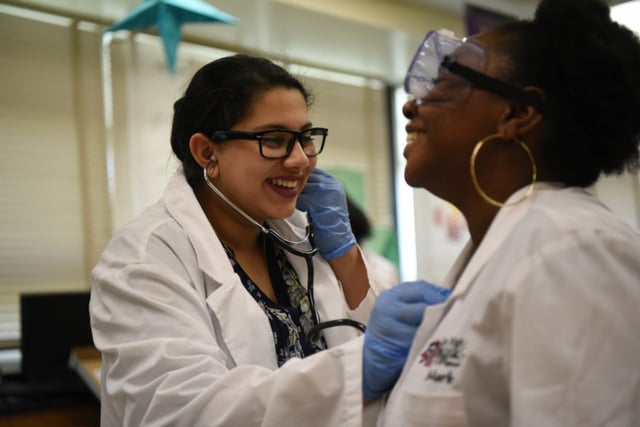
  • PLTW Biomedical Science: Explore health and medicine through topics like disease, DNA, prosthetics, and public health using industry-relevant tools.

  • PLTW Algebra 1 Advantage: Engage math students through curiosity and critical thinking with a supplemental curriculum that applies algebra to situations students will encounter in real life.

classroom implementation 4691

Get Started with Career and Technical Education

For schools and districts looking to start or grow CTE programs, ensuring vertical alignment and pathway relevance are critical. Other factors to consider include:

  • Standards connections
  • Academic rigor
  • Industry alignment
  • Implementation flexibility
  • Teacher training options
  • Grant funding availability

Want to create sustainable CTE that works? Integrate PreK–12 curriculum from PLTW that lets students explore 280+ careers.

Discover the Career Advantage

FAQ: Career and Technical Education (CTE)

Career and Technical Education (CTE) empowers students with real-world skills for college and career success. Through hands-on, engaging learning experiences, CTE connects classroom knowledge to in-demand fields like engineering, biomedical science, and computer science. Explore the FAQs below to learn how CTE prepares students for the future.